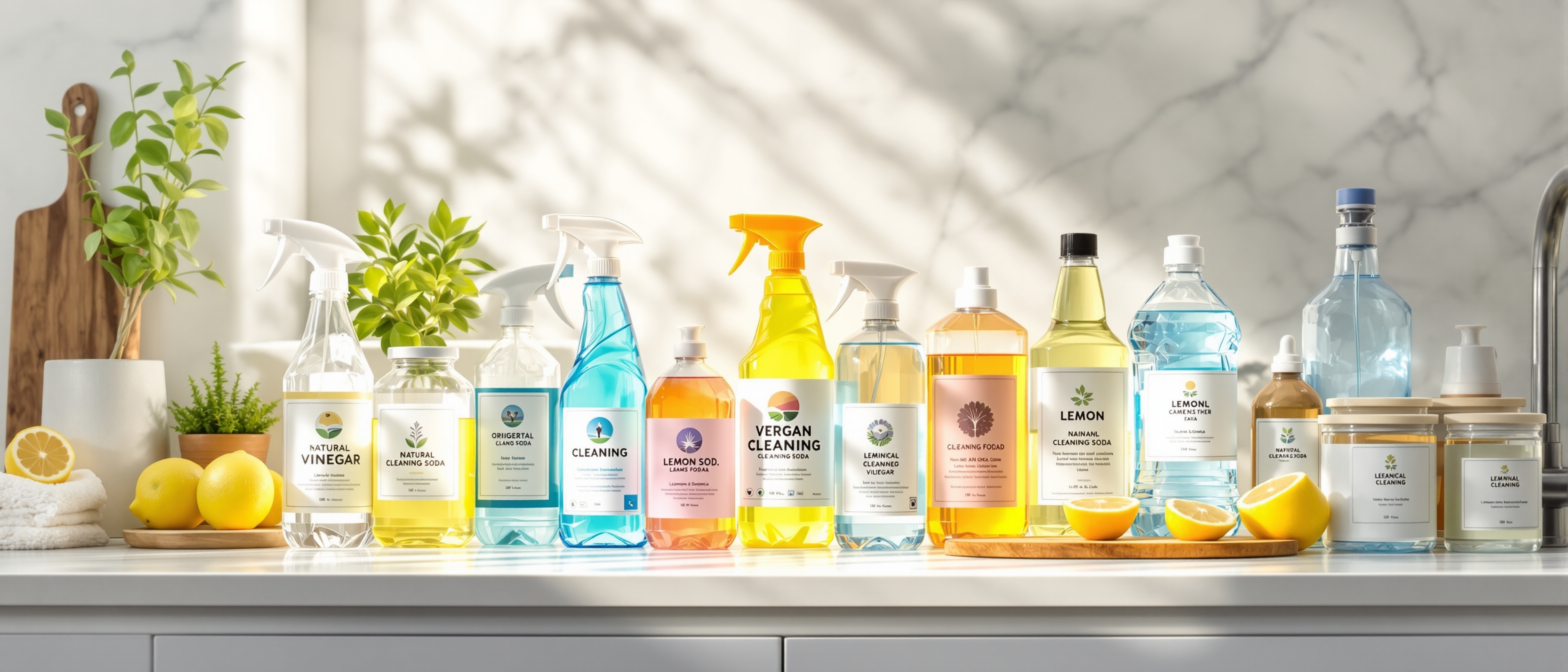
Walk down the cleaning aisle at any grocery store and you’ll find dozens of sprays, wipes, and solutions promising to make your home sparkle. But have you ever wondered how those household products stack up against the commercial-grade chemicals professional cleaners use? The differences might surprise you.
At MMKAY Cleaning Services, we get asked about this all the time. So let’s break it down — what’s actually in these products, when household cleaners are enough, and when you really need the professional stuff.
Quick Takeaways ✨
- Household products are designed for light, everyday maintenance
- Commercial products are stronger, more concentrated, and EPA-regulated
- Using the wrong product can damage surfaces or leave residue
- Professional cleaners know which chemicals to use — and which to avoid
What Are Household Cleaning Products?
Household cleaners are the products you find at Target, Walmart, or your local grocery store. Think Windex, Clorox wipes, Mr. Clean, Fabuloso, and Method sprays. They’re formulated for the average consumer — easy to use, pleasant‑smelling, and safe for general home use without special training.
Common household product characteristics:
- Lower concentration — diluted formulas safe for everyday use
- Added fragrances — lavender, lemon, “fresh linen” scents
- Multi‑purpose formulas — one product for many surfaces
- No special training required — designed for anyone to use
- Widely available — sold in retail stores everywhere
These products work great for wiping down counters after dinner, cleaning up a quick spill, or freshening up the bathroom between deep cleans. For daily maintenance, they’re perfectly fine.
Professional cleaners use carefully selected commercial‑grade products for each surface
What Are Commercial Cleaning Products?
Commercial‑grade cleaning chemicals are what professional cleaning companies, hospitals, restaurants, and facilities use. These products are typically purchased through janitorial supply distributors and are formulated for maximum effectiveness.
What sets commercial products apart:
- Higher concentration — often diluted on‑site for specific tasks
- EPA‑registered disinfectants — proven to kill specific pathogens
- Surface‑specific formulas — designed for stone, glass, wood, tile, etc.
- Requires proper training — incorrect use can damage surfaces or be hazardous
- Safety Data Sheets (SDS) — detailed documentation for safe handling
These aren’t the products you’d casually grab off a shelf. They require knowledge of dilution ratios, dwell times (how long a product needs to sit on a surface to actually disinfect), and which surfaces they’re safe to use on.
Head‑to‑Head: The Key Differences
| Factor | Household | Commercial |
|---|---|---|
| Strength | Mild / pre‑diluted | Concentrated / adjustable |
| Disinfection | Cleans surfaces | Kills 99.9% of bacteria & viruses |
| Fragrance | Heavy artificial scents | Minimal or fragrance‑free options |
| Residue | Can leave film or buildup | Rinse‑free or low‑residue |
| Surface Safety | Generic / multi‑surface | Formulated per surface type |
| Cost | $3–$8 per bottle | $15–$50+ (makes gallons) |
| Training Needed | None | Yes — dilution, dwell time, PPE |
The “Cleaning vs. Disinfecting” Myth
Here’s something most people don’t realize: cleaning and disinfecting are not the same thing.
Cleaning
Removes visible dirt, dust, and grime from surfaces. Most household products do this well. But cleaning alone doesn’t kill germs — it just moves them around.
Disinfecting
Uses EPA‑registered chemicals to kill bacteria, viruses, and fungi on surfaces. Requires proper dwell time — the product must sit wet for a specific duration to work.
Many household “disinfecting” sprays require you to leave the surface wet for 3‑10 minutes to actually kill germs. But most people spray and immediately wipe — which means they’re cleaning, not disinfecting. Commercial products are formulated with faster kill times and clearer instructions for proper use.
“We train our team on every product we use — the right dilution, the right dwell time, and the right surface. That’s the difference between a home that looks clean and a home that actually is clean.”
— MMKAY Cleaning Services Team
Common Household Product Mistakes
We’ve seen it all. Here are the most common mistakes homeowners make with store‑bought cleaning products:
Mixing bleach with ammonia or vinegar
This creates toxic chloramine or chlorine gas. Never mix bleach with other cleaning products — ever.
Using vinegar on natural stone
Vinegar is acidic and will etch and dull granite, marble, and other stone surfaces over time.
Using all‑purpose cleaner on wood floors
Many multi‑surface sprays leave a waxy residue that builds up on hardwood, making floors look dull and sticky.
Spraying and immediately wiping
Disinfectants need dwell time to work. If you wipe immediately, you’re just spreading germs around on a wet surface.
Using the right product for each surface prevents damage and ensures a true clean
What About “Natural” and DIY Cleaners?
We love that people care about what goes into their homes. Vinegar, baking soda, and lemon juice have their place — but they also have serious limitations:
The truth about natural cleaners:
- Vinegar is great for glass and light grease, but it’s not a disinfectant and damages stone, grout, and some metals
- Baking soda is a mild abrasive — good for scrubbing, but can scratch delicate surfaces like stainless steel
- Lemon juice smells great but is acidic and can damage countertops and fixtures over time
- Essential oils add scent but have zero proven disinfecting power on hard surfaces
Natural cleaners are fine for light daily tidying, but they simply can’t replace proper disinfection — especially in kitchens, bathrooms, and homes with young children or immunocompromised family members.
What MMKAY Uses (And Why)
At MMKAY Cleaning Services, we’re intentional about every product in our caddy. Here’s our approach:
Eco‑Friendly When Possible
We prioritize products that are effective AND safer for families, pets, and the environment.
Surface‑Specific Products
We use different products for granite, glass, hardwood, tile, and stainless steel — no one‑size‑fits‑all approach.
EPA‑Registered Disinfectants
For bathrooms, kitchens, and high‑touch areas, we use hospital‑grade disinfectants with proven kill claims.
Trained Staff
Every team member is trained on proper dilution ratios, dwell times, and safety protocols for each product.
When Should You Call a Professional?
Household products are great for maintenance between professional cleans. But there are times when you really need the commercial‑grade approach:
In these situations, the precision and power of commercial‑grade products — combined with professional training — makes a real difference in the health and safety of your home.
The Bottom Line
Household cleaning products have their place — they’re convenient, affordable, and fine for daily upkeep. But when it comes to truly disinfecting your home, protecting delicate surfaces, and ensuring a deep, thorough clean, commercial‑grade products used by trained professionals are in a different league.
The best approach? Use household products for daily maintenance, and schedule regular professional cleans for the deep stuff. Your home (and your health) will thank you.
Want a Truly Clean Home?
Let MMKAY’s trained team handle the deep cleaning with professional‑grade products that are safe for your family, pets, and surfaces.
Book Your Clean Today